
LightUp and the Codex of Endless Commits: A Magical History of Twenty Years of Software Evolution
"What shows our true character, my dear builders, is not the tidiness of the ledger. It is the willingness to write sync for the four-hundredth time and press on regardless." — attributed to the Headmaster of the Castle of LightUp
Introduction
It began, as the most dangerous adventures do, with a confident under-estimate. The founders looked upon the plan and pronounced it a thin slice of middleware — a modest little bridge to be finished in a couple of months, then forgotten. They did not yet know the story would run for twenty years, grow a web experience of its own, sail off to iPhone and iPad, and settle at last into a Windows sync application whose first windows were built with WPF.
Over the years that followed, a small company of builders raised a great castle from code, across a handful of parallel timelines that branched, mirrored one another, and — at the most dramatic moments — merged back into one. This is the story the Codex tells: not the tale the ledger politely claimed, but the truth beneath it. A chronicle of sync wars, of a secret network humming under the flagstones, of a Mirror that showed the team what they longed to build, and of the repairs that finally made the castle safe to live in.
Chapter I: The Founding and the First Foundation Stone
"Every castle begins with a single folder, selected in hope."
In the beginning there was the First Mason, who preferred to lay his foundations quietly and to give his early work the plainest of names. Then arrived the Tireless Architect, a builder of prodigious stamina and an even greater fondness for the word "Refactoring", who summoned the entire edifice into being with a single grand stroke of the chisel: run the application, choose a folder, and everything within it would mirror faithfully to the cloud.
Beneath that plain description lived a whole desktop engine — a watcher attending the castle's every whisper, a queue to tame the chatter of the walls, and a careful check that the chosen chamber was built of dependable stone. The Architect worked through the founding year with the patience of a portrait, and along the way he quietly settled an early hazard in which a file created and instantly renamed could confound the watcher; that danger is long since past. Other bright ideas he tried on, admired in the mirror, and gently set aside — the first of many the castle would outgrow.
Chapter II: The Long Sync Wars
"Correctness is never a single stroke. It is a siege, won slowly, over many winters."
For the better part of two years the Tireless Architect waged the Long Sync Wars. His enemy was not a dragon but something far more maddening: inconsistency. Files identical but for the case of a single letter. Prefixes that were somehow empty. Temporary scraps abandoned by office tools, littering the corridors like sweet wrappers after a feast. He answered each in turn, and he set every clock in the castle to one universal hour so that no two rooms could ever again bicker about the time.
His finest victory was Selective Sync — the power to choose exactly which chambers would mirror to the cloud — first raised in this age. And when the distant server began refusing the client outright, he replied not with fury but with patience, teaching it to fetch a fresh list of its libraries and simply try again. Twice he undid work of his own that had not proven out, rolling the stones back to where they belonged — for a castle is all the stronger for such honesty.
Chapter III: The Sorting Hat and Its Forty-Seven Trials
"A feature earns its place in the Great Hall only once the Hat has tested it — and lived."
In this age arrived the Trial-Keeper, who counted his victories aloud, and beside him the Loosener of Bindings, who freed the upload logic from the castle so it might travel the wider world. Together they lifted a portable grimoire of uploads out of the walls, and then they built the Sorting Hat itself: a suite of forty-seven trials through which every feature had to pass.
You can feel the whole season in the work — the slow, thrilling climb from a handful of passing trials toward the full set, each new green result bought with a fortnight's grinding and no small amount of honest dread that it would all come apart. File locking landed here too, so that two people could no longer scribble on the same page at the same moment and blame each other afterward. The multi-delete that misbehaved so alarmingly back then works flawlessly today.
Chapter IV: The LAN Beneath the Castle
"There are passages between the towers that the distant servers never see."
Then came the Tunneller, happily obsessed with the secret passages beneath the castle — the Discovery Service, a whispering network of enchanted portraits that let one tower fetch a page of parchment straight from a neighbour, so that when a colleague's machine across the office already held a file, the distant cloud need never be troubled at all. You can read the full engineering beneath the local-sync feature in our history of the LAN Discovery Service; here we simply salute the stubbornness it demanded.
It was brutal, unglamorous labour. Half his effort went to counter the castle's own firewall, which kept resealing the very passages he had just finished digging. He closed off the walls that led nowhere, forbade the portraits from whispering down dead ends, and traded a clumsy old waiting-charm for a graceful one. He even sealed a perfect little world in a jar for his trials, admired it, then thought better of it and let it go — reconciling two parallel timelines that diverged and rejoined like corridors on a moving staircase.
The Great Spring-Cleaning
Welcoming a new tower into an old castle has a way of revealing which floorboards creak, and bringing the Discovery Service home forced an honest reckoning with the castle's older rooms. Doors that had always stuck were rehung; a hall that froze whenever it waited on distant news was taught to keep its composure; corridors that two people could enter at once without colliding were widened and made safe. The setup ritual that greeted newcomers was made gracious rather than fussy, the reconciliations with the distant server made calm rather than quarrelsome, and the phantom quarrels that once erupted when two hands edited the same page were quietly laid to rest. None of it was glamorous, and all of it mattered: the castle emerged from that cleaning not larger, but truer — as befits a place built in the open, a philosophy we return to in the open source method.
Chapter V: The Reign of the Steadfast and the Word That Was "sync"
"When you cannot think what to name a thing, name it 'sync' — and let the work speak on your behalf."
Then began the longest reign of all: that of the Steadfast, a keeper of some seven hundred entries in the logbook and a truly heroic indifference to variety in naming them. For years he carried the whole castle almost single-handed. He tore out the old wiring and installed elegant new machinery in its place; he added a record of the day's comings and goings, a search by kind of media, a window of properties, and the very first glimmerings of enchanted intelligence woven into the walls. He set a watchful monitor to renew a traveller's token before it could expire mid-journey, and quietly removed a secret that had been lurking, unwisely, in the stonework.
His legend, though, is a single affectionate quirk: month after month, across every timeline, he named his checkpoints the same one small word — sync — driving pitons into the cliff-face one after another, comic and quietly heroic in the same breath. Beneath that word lived everything: fixes, trials, refactors, the steady heartbeat of a codebase kept alive by one determined hand. The stubborn catch that once refused to release a locked file is gone now, and the traveller's token no longer expires halfway up the stairs.
Chapter VI: The Mirror of Erised — Avalonia, Linux, and the Wish to Run Everywhere
"The Mirror shows not what is, but what a team most desires: to run everywhere, on every world."
Late in the tale, the castle gazed into the Mirror of Erised and beheld itself reborn — no longer chained to a single kind of stone. The Steadfast raised a new cross-platform frame so the windows might open onto any world at all, welcomed Linux as a proper resident rather than a guest, and taught the client to draw its link to the server from a single machine-readable scroll instead of a great deal of copying by hand.
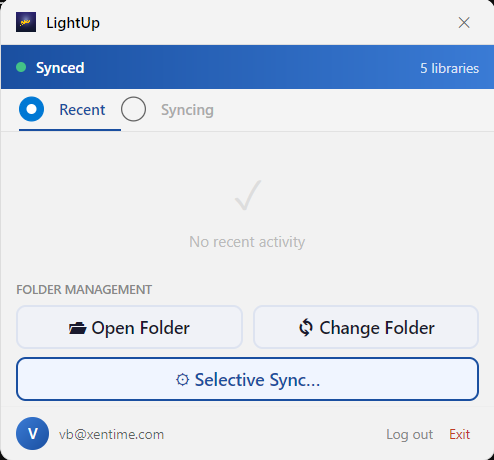
The most poignant work was a farewell: letting go of the invisible metadata once tucked inside the stones themselves, a clever trick that flourished on one kind of world and failed on all the others. Surrendering it was the price of true portability, and the unified client that emerged fulfilled a long-held prophecy at last. The new windows are calm, quiet, and modern — a far cry from the busy dashboards of the founding years:
Chapter VII: The Counter-Curses — Security, Signing, and the Zombie That Would Not Rest
"A castle is not finished when it is beautiful. It is finished when it can be trusted."
In the final chapter the auditors came, and with them the most serious danger yet discovered: a hidden way in, dormant deep where the network read its own parchment, through which an intruder might have seized the whole castle. The Steadfast sealed that door with one decisive stroke, set stricter checks on every page the secret passages served, and fortified the logs against tampering. The gatehouse was fitted with proper seals and signatures, so that any visitor could verify at a glance that the castle was genuinely the castle it claimed to be.
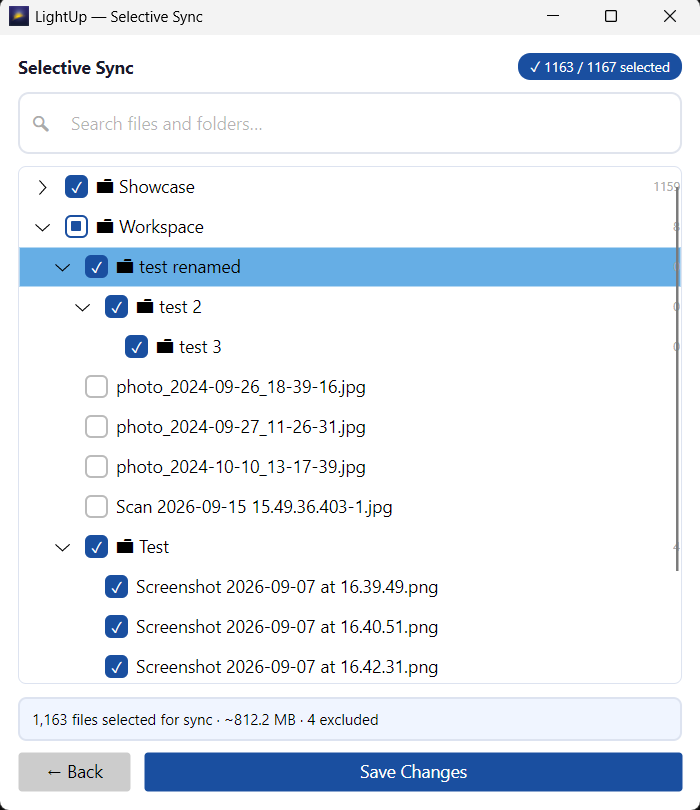
And then, in a homecoming worthy of prophecy, the First Mason himself returned after twenty years to raise a gleaming new Selective Sync hall — a tree of choices that understood "some of this, not all of it," a search in the modern style, and a tray that hummed gently with activity:
He also laid to rest the most stubborn spectre of the whole history: a client that flatly refused to die when told to. He bound it at last with a shutdown that would actually end — bounded, cancellable, honest — and carved the lesson into a guide-scroll so that no successor would repeat the haunting. The login that once hung like a stuck portrait, and the logout that summoned the ghost, are both gone. The gatehouse now bears its first proper carved milestone.
Epilogue
Today the castle of LightUp stands on modern foundations, its towers portable across Windows and Linux, its dungeons sealed against the intrusion that once lurked there, its shutdown so well-behaved that no process lingers behind as a ghost. The Room of Requirement — that place where all the once-broken things now work reliably — has finally revealed itself: the rename hazard, the firewall passages, the mid-journey token, the stubborn prefix, the hung login. Each appeared, as such rooms always do, at precisely the moment the team had suffered enough to learn how to use it.
What does the Codex reveal about these builders? Resilience, above all — the Architect's discipline, the Trial-Keeper's nerve, the Tunneller's cheerful war with the firewall, the Steadfast's years of quiet devotion, and the First Mason's return to finish what he began two decades before. They tried, they undid, they merged their parallel realities, and then they tried again — which is the whole of the craft, really.
For software, like a castle, is never truly finished. It is only ever loved well enough to keep repairing, one honest stroke at a time.
This post was conjured from more than sixteen hundred commits, across several parallel timelines, spanning twenty years of magical engineering.